Listeners:
Top listeners:
-
 play_arrow
Matinee Musicals The Greatest Shows
-
 play_arrow
Wicked Celebrates 15th Birthday in London’s West End admin
28-04-26 Manchester Opera House by Katy Ratican
Let’s get the big confession out of the way early: this reviewer has neither read James M. Cain’s original novella nor watched Billy Wilder’s celebrated 1944 film adaptation. So, for better or worse, this review comes without the weight of those comparisons.
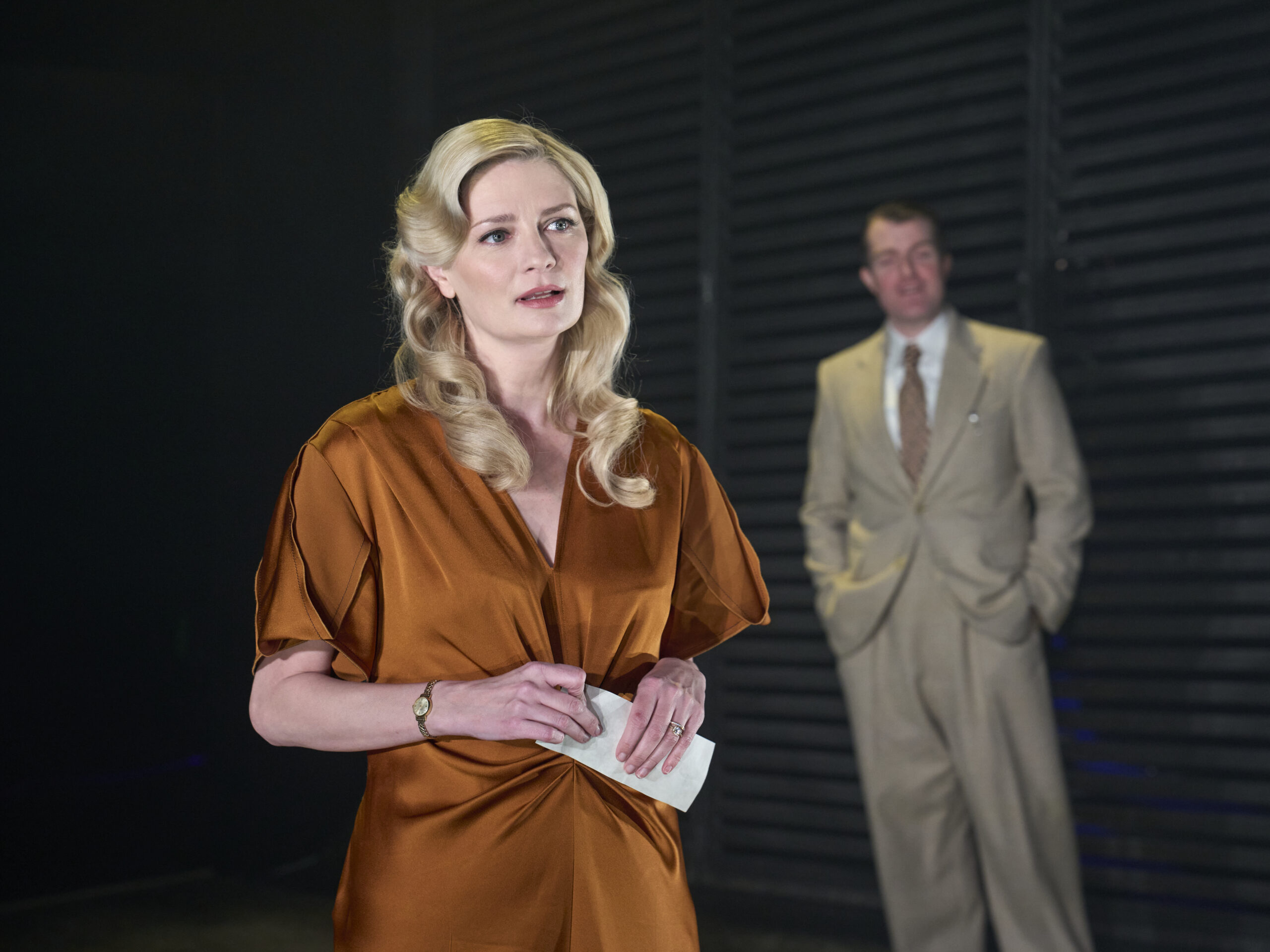
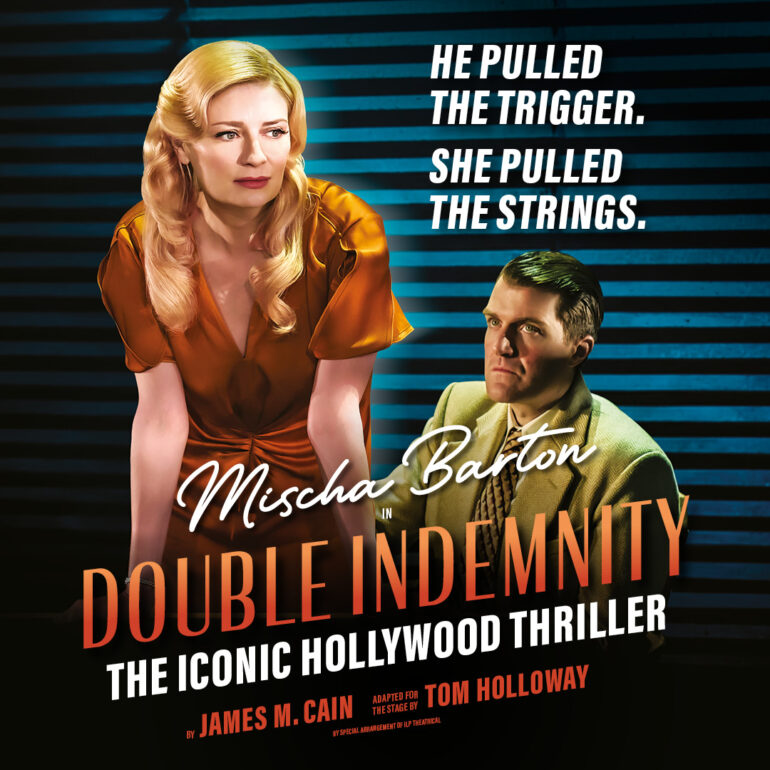
Double Indemnity, adapted for the stage by Tom Holloway and directed by Oscar Toeman, arrives with a considerable noir legacy behind it. For those coming to the story fresh, it offers a tale of greed, lust and betrayal in 1930s Los Angeles. At the centre of the plot is Walter Huff, an unscrupulous insurance salesman who becomes entangled with Phyllis Nirdlinger, a classic femme fatale with a very particular (and common) problem: her husband. Together, the pair hatch a plan to murder Mr Nirdlinger and claim the payout on his life insurance policy, which, thanks to a double indemnity clause, would pay $50,000 if his death is deemed accidental.
The plan itself, claimed to be ‘the perfect murder’ by Walter, is clearly far from it. Kill the husband, dump the body on train tracks, make it look like a tragic accident and walk away richer. Simple enough, in theory. But as jealousy, guilt and suspicion begin to creep in, the best-laid plans quickly start to fray. In many ways, this is less a traditional whodunnit than a “how will they get caught?” story. Fans of Columbo may find plenty to enjoy here, as the audience is brought in on the crime from the start. The pleasure, then, is in watching the consequences unfold.
That sense of complicity is helped by the immediate breaking of the fourth wall by Walter, played with energy and assurance by Ciarán Owens. It is a fun opening device, especially if you are not expecting it and Owens proves one of the production’s strongest assets. He gives Walter enough charm to keep the audience with him, even when the character’s morals have long since left the building.
Hollywood actor and star of The O.C. Mischa Barton makes her UK stage debut as Phyllis Nirdlinger and there is no denying that she looks the part. Costumed as the femme fatale, she visually fits neatly into the smoky noir world the production is trying to create. But her performance does not always carry the same conviction. Her line delivery is stilted at times and her movement on and off stage can feel oddly robotic, lacking the natural flow of some of her more theatre-experienced cast members.
The bigger issue is the lack of believable chemistry between Phyllis and Walter. There are flickers of intrigue in their first scene together, but any spark soon fades. As the plot depends heavily on their dangerous attraction, this becomes difficult to overlook. Even with the irresistible lure of $50,000, it is hard to understand why these two would risk everything together. The audience needs to believe in the pull between them or at least understand the obsession. Here, that emotional investment never quite lands.
Elsewhere, the small cast is solid. Oliver Ryan makes a strong impression as Mr Nirdlinger, Phyllis’s confrontational husband. Martin Marquez is also very enjoyable as Keyes, landing many of the production’s funnier moments with ease, while Sophie Roberts brings warmth and credibility as Lola Nirdlinger. As is often the case with smaller productions, several cast members play multiple roles. While this is understandable, it occasionally becomes distracting. There are moments where a character has barely died before the same actor reappears as someone else, which can pull you out of the story rather than further into it.
Visually, the production is sparse. The set keeps things stripped back, which works well enough for a story built on tension and moral claustrophobia. Less successful is the lighting effect across the Hollywood sign looming over the stage. From the audience, it did not read clearly and it is doubtful everyone in the audience knew what it was supposed to say. Still, the key themes of Cain’s original story are all present: greed, lust, betrayal and the intoxicating stupidity of people who think they can outsmart the consequences of their own actions. Whether the production fully captures the seductive danger of the material is another question.
Coming to this without the comparisons of the novella or the film, there is something to enjoy in the premise, the noir flavour and several strong performances. But the production is let down by a central relationship that never quite convinces. For Columbo fans, though, there is a particular pleasure in watching the crime unfold from the inside out. You know what has happened. You know who is responsible. The question is whether they will get away with it – and whether you care enough if they don’t.
Double Indemnity now plays at New Theatre Cardiff until 9th May.